

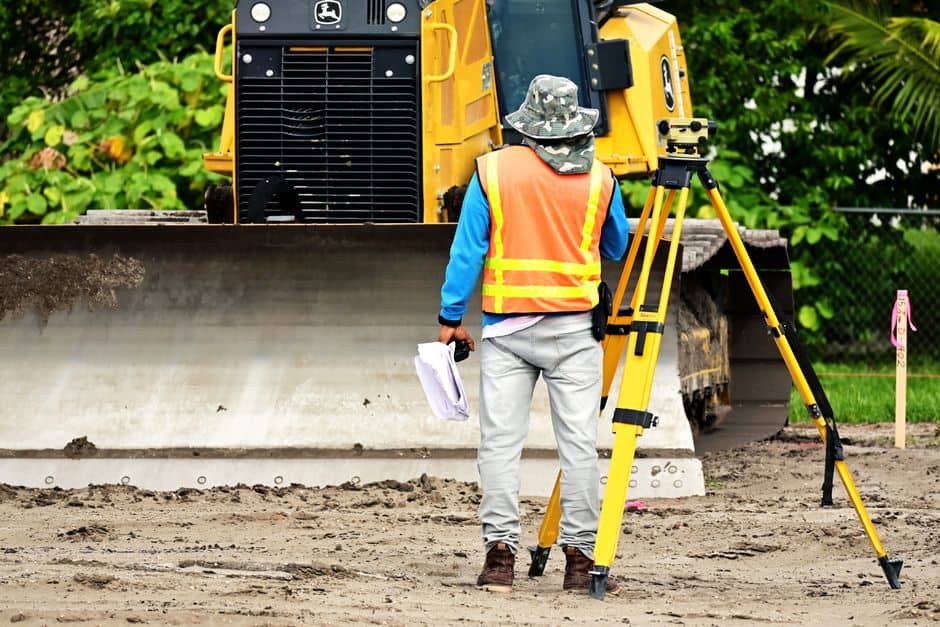
What is “heat-smart” surveying, and why is it suddenly such a big deal?
“Heat-smart” surveying is the practice of planning and executing field measurements with the explicit goal of reducing heat-related errors and protecting crews during high-temperature conditions. It’s become a hot topic (literally) because many projects now face more frequent and intense heat waves, longer hot seasons, and tighter schedules that don’t always allow easy weather delays.
From a surveying and construction perspective, extreme heat creates a two-part problem:
- Human factors: fatigue, dehydration, reduced focus, and higher safety risk.
- Measurement factors: thermal expansion of materials, heat shimmer (atmospheric refraction), electronic performance drift, and unstable tripod setups on baked ground.
Heat-smart surveying doesn’t require fancy new gear; it’s often about adjusting workflows, calibrations, timing, and documentation so your results remain defensible and repeatable.
How does extreme heat actually change survey measurements?
Heat affects measurements through the materials you measure, the air you measure through, and the equipment doing the measuring.
1) Thermal expansion of materials (steel, concrete, even tape)
Most crews know steel expands when hot, but the important part is how much and when it matters. Steel’s coefficient of thermal expansion is roughly 11–13 microstrain/°C. A practical rule of thumb:
- About 0.12 mm per meter per 10°C for steel.
Real-world example: If you’re setting anchor bolt centers using a steel tape over a 30 m span, and the tape temperature is 20°C hotter than the tape’s standard calibration temperature, the apparent length can be off by roughly:
- 0.12 mm/m per 10°C × 2 × 30 m ≈ 7.2 mm
That’s enough to cause fit-up pain for structural steel, precast panels, or equipment skids.
2) Atmospheric refraction and “heat shimmer” (especially near pavement)
When the ground is hot, the air above it forms layers of different densities. Light bends as it passes through these layers. For optical lines of sight (and even some EDM paths), this can introduce angle and distance anomalies—often worst in mid-afternoon across asphalt, concrete, or bare soil.
Actionable tip: If you must shoot across a large hot surface, raise the line of sight (higher tripod, taller rod, or offset the shot path) so you’re not measuring in the most turbulent air layer closest to the ground.
3) Instrument performance and stability
Total stations, GNSS receivers, batteries, and tribrachs all behave differently in heat. Battery capacity drops, plastics soften slightly, and instrument compensation systems can be stressed when the sun beats directly on the housing.
Actionable tip: Shade the instrument between shots (even using a small reflective cover) and avoid leaving it baking in a closed vehicle. Let equipment acclimate before high-precision work.
What types of construction surveying are most vulnerable to heat-related error?
Heat can affect any field task, but these are most sensitive:
- Long baseline layout: control extensions, long offsets, and setting large grids on hot days.
- Vertical control transfer: optical leveling over shimmering surfaces.
- As-built checks for steel and embeds: tight tolerances meet thermally expanding members.
- Bridge and roadway work: measurements across asphalt or concrete that radiates heat.
- Industrial installs: equipment skids, pipe racks, and alignment tasks where millimeters matter.
Practical note: In many cases the biggest errors show up not because the instrument is “wrong,” but because the site conditions differ from the assumptions used when the control and tolerances were established.
How can we schedule heat-smart surveying without blowing the construction program?
Scheduling is often the cheapest accuracy upgrade you can buy. A heat-smart plan prioritizes precision work when conditions are calm and cool.
- Do high-precision control work early: Aim for sunrise to late morning for control densification and critical layout.
- Reserve afternoons for lower-risk tasks: stakeouts with larger tolerances, site walks, documentation, and office reductions.
- Use “split shifts” during heat waves: An early shift plus a short evening window can outperform one long midday push.
- Lock in temperature-dependent tasks: If you must measure steel or long tape distances, do it when material temps are stable (often early morning) rather than during peak sun.
Real-world workflow example: On a slab-on-grade project, a crew might set primary control and slab pour layout by 10 a.m., then switch to punchlist as-builts, scanning prep, or QA paperwork during peak heat.
What field checks catch heat-induced issues before they become rework?
Heat errors often masquerade as random noise. Quick verification steps make problems visible.
- Close loops more often: Treat hot days like “high-risk” days—run frequent backsight checks and close traverses sooner.
- Use redundant observations: Re-shoot critical points from a second setup or different time window.
- Track residual patterns: If errors trend in one direction after noon, that’s a clue you’re seeing refraction or thermal effects.
- Document surface type: Shots across asphalt at 3 p.m. aren’t equivalent to shots across grass at 9 a.m. Log it.
Actionable tip: Build a “heat flag” into your field notes: air temperature, surface type (asphalt/concrete/soil), cloud cover, and time of day for any control or tolerance-tight layout.
Do GNSS measurements get worse in heat, or is that mostly an optical total station problem?
GNSS is less sensitive to near-ground optical refraction, but heat can still degrade results indirectly:
- Battery and electronics: hot batteries can deliver shorter run time and more voltage sag.
- Tripod/rod instability: baked ground can soften or crack; bipods can creep.
- Multipath changes: heat haze isn’t “multipath,” but high-traffic summer environments can increase reflective interference (vehicles, temporary metal, staged materials).
- Human error increases: rushed setups, skipped level bubbles, and shortened occupation times happen when crews are trying to “beat the heat.”
Best practice: On hot days, slightly increase occupation time for control points and be strict about rod level and fixed-height setups. If you’re using RTK/Network RTK, confirm your localization and monitor quality indicators (PDOP, ambiguity status, residuals).
How should we handle temperature corrections for tape, EDM, and critical dimensions?
Temperature corrections range from “ignore it” to “mandatory,” depending on tolerances.
For tape measurements
- Measure tape temperature (not just air temperature). A tape in the sun can be significantly hotter than ambient.
- Use calibrated tapes and know the standard temperature from the certificate.
- Reduce sun exposure: shade the tape, or use invar/low-expansion solutions when justified.
For EDM/total station distances
- Input correct PPM settings (temperature and pressure) if your instrument uses them.
- Avoid long low lines of sight over hot surfaces where refractive gradients dominate.
Actionable tip: If your project involves tight steel or equipment tolerances, agree in writing (survey plan or QC plan) on how temperature corrections will be handled—especially if dimensions are compared to shop drawings produced at a different assumed temperature.
What’s a practical heat-safety protocol for survey crews that still keeps production moving?
Safety and productivity aren’t enemies; heat illness is a guaranteed productivity killer. A field-ready protocol usually includes:
- Work/rest cycles: pre-plan short rests rather than waiting for exhaustion.
- Hydration standard: don’t rely on “drink when thirsty.” Set minimum intake guidelines and keep water accessible (not in the truck a quarter-mile away).
- Cooling tactics: shade, cooling towels, and breathable PPE options where allowed.
- Buddy checks: heat stress is easier to spot in someone else than in yourself.
- Heat trigger plan: at a defined heat index threshold, automatically shift to earlier hours or lower-risk tasks.
For broader context on how heat is affecting work and daily life in many regions, major news outlets have been tracking heat waves and their impacts; a helpful starting point for general reporting and background is The New York Times climate and weather coverage.
How do we explain heat-related survey variance to a GC or owner without sounding like we’re making excuses?
The key is to frame heat as a manageable quality variable, not a vague complaint.
- Use records: show time-of-day, temperature, surface type, and check-shot residuals.
- Offer options: propose a re-check window (early morning), or a redundant method (GNSS + total station, or short-range resection).
- Connect to tolerance: “This embed layout requires ±3 mm; afternoon refraction across the slab increases risk. We recommend confirming at 7–9 a.m.”
- Document decisions: if the team chooses to proceed in high heat, note the condition and the agreed approach.
Real-world example: On an industrial foundation, if afternoon shots show a consistent 5–8 mm shift compared to morning control checks, the conversation becomes straightforward: either accept the risk, change measurement geometry, or reschedule critical layout.
What are the best “low-cost” upgrades for heat-smart surveying?
You don’t need a new robot or scanner to improve hot-weather outcomes. Consider these upgrades first:
- Reflective instrument shade (lightweight cover kept in the field kit).
- Ground plates or tripod shoes for soft or cracking soils.
- Better field logging (simple template for heat conditions and check shots).
- Extra batteries stored properly (avoid cooking them in the cab).
- Defined “critical shot” checklist so crews don’t skip verification when uncomfortable.
Conclusion: What’s the takeaway for construction teams working through hotter seasons?
Extreme heat doesn’t have to mean sloppy layout or constant rework. The crews who perform best in hot conditions tend to do three things consistently: (1) schedule precision work during stable, cooler windows; (2) build redundancy and documentation into their field process; and (3) treat heat safety as part of quality control, not a separate issue.
If you adopt even a basic heat-smart playbook—temperature-aware planning, smarter line-of-sight choices, frequent closure checks, and clear communication—you’ll protect your people and deliver measurements the project can trust.