

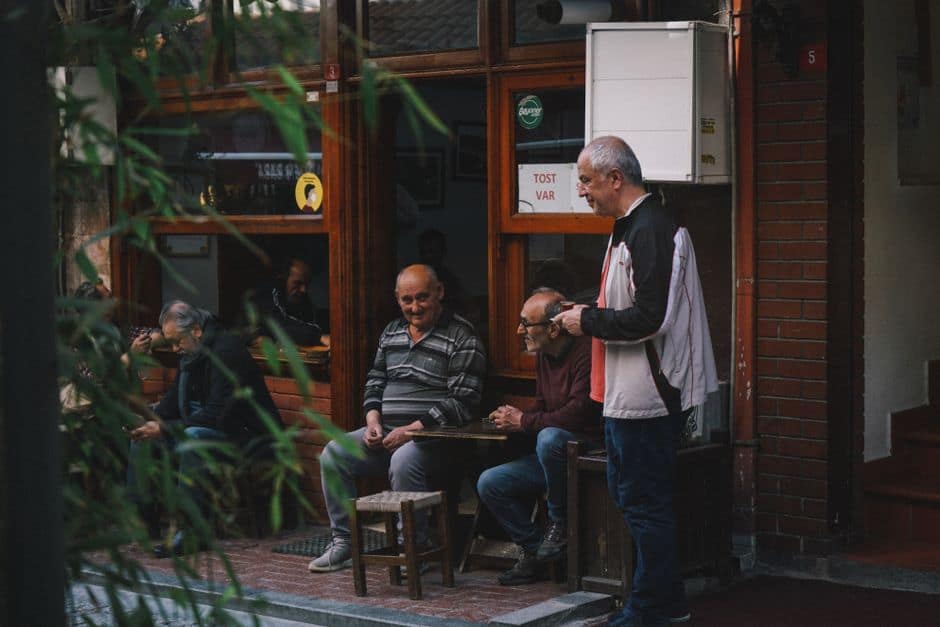
Why the “Third Place” is suddenly trending again
Work (first place) and home (second place) dominate most modern schedules. What’s missing is the “third place”: that low-pressure, familiar spot where you can regularly see the same faces and slowly build real community. Think libraries, community centers, hobby clubs, weekly markets, volunteer groups, or even the same park bench at the same time every Saturday.
The third place concept isn’t new, but it’s having a moment because people are tired of shallow scrolling and “networking” that feels like a performance. The good news: you don’t need to move to a small town or join an expensive club to get a stronger sense of belonging. You just need repeatable, low-friction habits and a couple of smart “social systems.”
This roundup pulls together practical ideas, prompts, and resources to help you rebuild community in a realistic way—even if you’re busy, introverted, new in town, or watching your budget.
Quick self-check: what kind of third place do you actually need?
Before you pick a strategy, choose your “community goal.” Here are common ones:
- Friendly familiarity: You want to recognize people, say hi, and feel less anonymous.
- Shared interest: You want to talk about something specific (books, chess, plants, running, etc.).
- Support network: You want people who can help in small ways (recommendations, rides, job leads, pet-sitting).
- Skill-building: You want structured learning with a built-in social layer (language classes, improv, maker spaces).
Pick one goal for the next 30 days. Community grows faster when you’re not trying to get every benefit at once.
15 third-place strategies (tested, practical, and not weird)
1) Use the “same time, same place” rule
Consistency beats intensity. Choose one repeating slot—like “Wednesday 6:30pm at the community gym” or “Sunday 10am at the farmers’ market.” Showing up at the same time is how strangers become familiar faces.
- Action tip: Put it on your calendar as a recurring event for 6 weeks.
- Real-world example: People who become “regulars” at a weekly coffee shop run group often report making friends within a month because introductions happen organically (“Oh, you’re here every week too?”).
2) Borrow third places from public infrastructure: libraries
Libraries are underrated community engines. Many host book clubs, job-search workshops, local history talks, kids’ events, quiet co-working, and hobby meetups—often free.
- Action tip: Search your local library’s event calendar and pick one recurring program.
- Conversation starter: “Have you been to this event before?” (It works almost every time.)
3) Try “volunteering with a schedule,” not one-off volunteering
One-off volunteering can feel anonymous. Weekly or biweekly shifts create the repetition that builds relationships.
- Great options: food banks, community fridges, park cleanups, animal shelters, museum docents, tutoring programs.
- Action tip: Pick a role that naturally pairs people (sorting donations, team shifts, check-in tables).
4) Turn errands into micro-community: the “regular route”
If your schedule is packed, don’t add new commitments—upgrade the ones you already have. Use the same grocery store, the same pharmacy, the same corner store, the same walking loop.
- Action tip: Learn one staff member’s name and use it once a week. Familiarity compounds.
5) Join a “weak-tie” club on purpose (they’re powerful)
Not every connection needs to become a best friend. Weak ties—people you see occasionally—are linked to opportunity and wellbeing because they broaden your world without heavy emotional demand.
- Examples: community choir, beginner pickleball, tabletop game night, local walking club.
- Action tip: Choose something with built-in structure so conversation isn’t the only activity.
6) Build your own third place with a “two-person minimum” rule
Hate joining groups? Start tiny. Invite just one person and make it recurring. Over time, others may join.
- Examples: “Friday lunch swap,” “Sunday morning park loop,” “monthly dumpling night.”
- Action tip: Keep it simple: same location, same time, same format.
7) Use the “ask for local advice” script (it’s magic)
People like being helpful. Asking for local tips is a low-stakes way to open conversation.
- Scripts that don’t feel forced:
- “What’s your go-to order here?”
- “Do you know any good beginner-friendly [activity] groups around here?”
- “Is there a time this place is less crowded?”
8) Choose places that encourage lingering (not just transactions)
Community needs “linger time.” A spot where people naturally hang around creates more chances for casual interaction.
- Good third places: community gardens, makerspaces, board game cafés, hobby shops with tables, rec centers, open studios.
- Action tip: If you’re always rushing, arrive 10 minutes early and stay 10 minutes after.
9) Reclaim “public culture”: talks, lectures, and free local events
Universities, museums, and city programs often run free talks and workshops. They’re perfect for meeting people because conversation can start with the shared topic.
- Action tip: After an event, ask one person: “What did you think of that last point?”
10) Try low-cost membership models instead of pricey social clubs
Some of the best community spaces are inexpensive because they’re subsidized or community-run.
- Examples: tool libraries, community gyms, co-op workshops, allotment gardens, local art associations.
- Action tip: If you’re on the fence, ask about a trial day or volunteer-in-exchange options.
11) Use “social stacking” to meet more people with one activity
Social stacking means choosing activities that naturally lead to another setting: practice + coffee, volunteering + debrief, class + open studio.
- Example: Join a beginner running group that ends at a café; the post-run chat is where friendships form.
12) Create a “micro-hosting” habit (no dinner parties required)
Hosting sounds intense, but micro-hosting is just offering a tiny container for connection.
- Ideas: “Bring your lunch and eat outside,” “swap plants,” “walk-and-talk,” “one episode night.”
- Action tip: Make it time-boxed (60–90 minutes). People say yes more often when there’s a clear endpoint.
13) Track your community like a habit (because it is one)
Community building is less about charisma and more about repetition. Treat it like brushing your teeth: small, consistent actions.
- Simple metric: Aim for 2 “light interactions” and 1 “long interaction” per week.
- Light interaction: short chat with a neighbor, barista, or classmate.
- Long interaction: walk, meal, volunteer shift, club meeting.
14) Learn from places that still do community well
Want inspiration for what’s possible? Look at communities where public gathering spaces are protected and celebrated. Coverage from The Guardian’s reporting on community life and local spaces can be a useful lens for understanding what helps neighborhoods thrive (and what erodes them). Use it to spark ideas you can adapt locally.
15) Use a “second-connection” follow-up to turn acquaintances into friends
The first interaction is the opener. The second is the glue. After you’ve met someone once, your job is simply to create a second moment of contact.
- Easy follow-ups:
- “I’m coming to this again next week—see you there?”
- “You mentioned you liked [thing]. Want to check out [related event]?”
- “Here’s that link/book/podcast we talked about.”
Mini resource list: where to find third places near you
- Your public library’s events page: book clubs, workshops, language circles, community notices.
- City parks & recreation listings: leagues, classes, open gyms, walking groups.
- Community center bulletin boards: surprisingly active for hobby meetups and local services.
- Volunteer matching platforms: search for recurring shifts and team-based roles.
- Independent shops: game stores, craft stores, bike co-ops, music stores (many host community nights).
Common obstacles (and how to get past them)
“I’m introverted and this sounds exhausting.”
Pick structured activities where talking is optional (classes, volunteering, sports, craft circles). Aim for familiarity, not constant conversation. The goal is to be a regular, not a performer.
“I don’t have time.”
Turn one existing errand into a third-place habit. Same café once a week. Same park loop. Same volunteer shift twice a month. Community responds to consistency more than duration.
“I tried a group and it was awkward.”
Totally normal. Give it three visits before you judge it. Most groups have a “warm-up curve” where the first time feels clunky and the third time feels familiar.
Conclusion: community isn’t found—it’s repeated
Third places aren’t about collecting contacts or forcing friendship. They’re about showing up in the same corner of life often enough that connection becomes inevitable. If you choose one recurring time slot, one place that lets you linger, and one tiny follow-up habit, you’ll be shocked how quickly your world starts to feel more human.
Pick one idea from this roundup and try it for 30 days. You’re not aiming for a perfect social life—you’re building a steady, friendly ecosystem that makes everyday life feel better.